



| ||||||||
| | | | | | | | |
 |
||||||||||||
 |
"My
first memory is sitting on the balcony in the south of Italy drawing.
I have a motto: I paint to survive, I paint to forget, I especially paint to remember". |
|||||||||||
 |
||||||||||||
 |
||||||||||||
 |
 |
|||||||||||
 |
||||||||||||
|
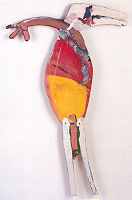
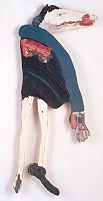
Adam
and Eve painted in 1967 are very amusing. Their cut-out, silhouetted
shapes parody traditional representations and are a commentary on male-female
relationships. The raucous rhythms of Adam and Eve's contours
translates into raucous humor. Contrary to the primal progenitors of mankind
who are always pictured naked, Ragusa's Adam and Eve are portrayed as
fully clothed creatures except, paradoxically, for their sexual features.
|
||||||||||||
 |
||||||||||||
 |
||||||||||||
 |
||||||||||||
 |
||||||||||||
|
"Adam"
|
"Eve"
|
|||||||||||
 |
||||||||||||
|
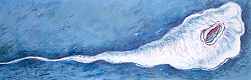
Not
Only Water Has Memory represents Giovanni Ragusa in mid-career, when
the artist's stance is far more introspective than the paintings he did
during the California sojourn of 1967 and 1968. Because of its enormous
size, this new painting is also intended to be a signpost. Its subject
is no way mundane but depicts the primordial substance from which all
existence has evolved. He indicates that "my intention was to isolate
Primal Shape - it represents the origin of everything; it is male and
female".
|
||||||||||||
|
"Not
Only Water Has Memory"
|
||||||||||||
|
Giovanni
Ragusa says that all his images including the enormous amoebic shape in
Not Only Water Has Memory are a result of emotion and intuition.
He says that his work is a search for 'the Big Mystery', perhaps another
way of saying 'God' - and to which he dedicates the Museo's exhibition.
|
||||||||||||
|
When
I was new to my position as Director of the Museo ItaloAmericano, I was
having a very pleasant dinner-meeting with Modesto Lanzone at his restaurant.
While eating il primo of the evening's meal my eyes became riveted
by a painting on the wall behind Modesto who informed me it was by the
Italian artist Giovanni Ragusa. I blurted out that I thought the Museo
should have an exhibition of the artist's work. Pleased that my response
was equal to his, Modesto indicated his willingness to help put a show
together. Sitting at the same table at a more recent meeting, but with
another artist's work hanging where I expected the Ragusa to be, Modesto
told me that Ragusa was sending a recently finished painting, Barbary
Coast - curators are always excited by having their exhibitions being
as current as possible. This major work, Not Only Water Has Memory
was accompanied by two (unexpected) monumental works on paper. I and Modesto
have had subsequent meals, now joined by Giovanni Ragusa visiting from
Florence, at which I had the chance to know the artist better, and to
become more familiar with his way of thinking.
I would like to express my thanks to Giovanni and Modesto - to Giovanni Ragusa for the expressiveness of his vision; and to Modesto Lanzone for his unstinting enthusiasm and love for art, and for his unfailing support - in this case for the exhibition and catalog. What more could a museum director ask for? - good art, a catalog for a beautiful exhibition and, of course, a delicious meal at a wonderful restaurant. I would also like to express my appreciation to those individuals who have assisted in the realization of Giovanni's exhibition. Special thanks must go to my assistant Elaine Romano whose patience can be truly tried but whose support is always there, to Roy Tomlinson whose professionalism always results in beautiful installations of the Museo's exhibitions, and to graphic designer Marcia Loeb whose efforts have resulted in this beautiful catalog. Robert A. Whyte Executive Director, Museo ItaloAmericano 7 September 1988 |
||||||||||||
 |
||||||||||||